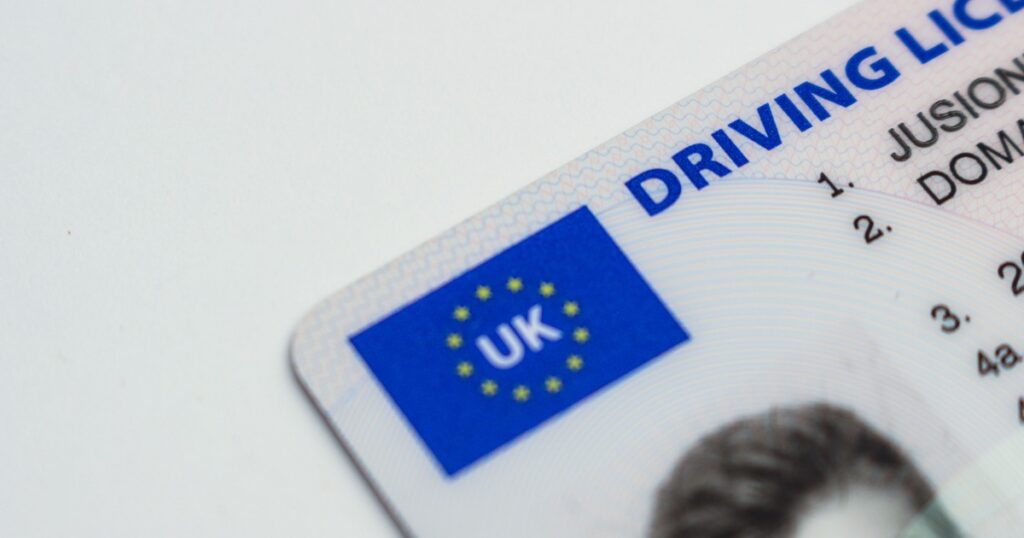
Converting your overseas licence to a Victorian licence requires specific preparation that most overseas drivers underestimate. At Lessons2Drive, we specialise in helping overseas licence holders understand exactly what the VicRoads drive test requires — and why years of overseas driving experience does not exempt you from any of it. Our founder conducted over 1,800 official VicRoads drive tests and has seen exactly where overseas drivers fail — and how to fix it before your test.
Written by
Chamitha Lokuwithana — Ex-VicRoads Licence Testing Officer
1,800+ official drive tests conducted · Founder, Lessons2Drive
Converting your overseas licence to a Victorian licence is not complicated — but the drive test at the end of the process is exactly the same test every learner driver sits. The same criteria. The same assessment items. The same Immediate Termination Errors that end the test on the spot. Having driven overseas for years does not exempt you from any of it. After conducting over 1,800 official VicRoads drive tests, I can tell you what overseas drivers get wrong — and what you need to know before you book your test.
First — How Long Can You Drive on Your Overseas Licence?
You can drive in Victoria on a valid overseas licence for up to 6 months from the date you arrive. After 6 months, your overseas licence is no longer valid for driving in Victoria and you must hold a Victorian licence or learner permit to drive legally.
Important: If you fail a required VicRoads test during the conversion process, your overseas licence becomes invalid for driving in Victoria until you pass. This is a significant consequence that many overseas drivers don't know about until it's too late.
The Complete Conversion Pathway — Step by Step
1
Create a myVicRoads Account
Before anything else, you need a myVicRoads account at vicroads.vic.gov.au. This is where you'll book appointments, access the Learner Permit Test, manage your progress, and eventually book your drive test. Create your account first — every subsequent step requires it.
2
Book a VicRoads Appointment to Verify Your Overseas Licence
You must attend a VicRoads Customer Service Centre in person to begin the conversion process. Bring your overseas licence, proof of identity, proof of Victorian residency, and any certified translations if your licence is not in English. VicRoads may need to verify your licence directly with the issuing country — some applicants receive a verification letter before the process can continue.
Note: Whether you need to sit the full drive test or receive direct licence recognition depends on which country your licence was issued in. Countries with direct recognition agreements with Victoria may not require a drive test. Check your specific country's status on the VicRoads website before proceeding — the pathway differs significantly.
3
Complete the Learner Permit Test Online (LPT)
The LPT is an interactive online course of 4–6 hours covering Victorian road rules, safe driving habits, and hazard awareness. You must complete it within 12 months of starting. The LPT is not optional — it's required regardless of how many years you've been driving overseas. It ensures you understand Victorian-specific road rules before you sit the hazard perception test.
Why this matters for overseas drivers: Victoria drives on the left. If you're from a right-hand-traffic country, the LPT content on give way rules, roundabout signalling, and lane positioning will be directly relevant to errors commonly made on the VicRoads drive test. Don't treat it as a formality.
4
Pass the Hazard Perception Test (HPT)
The HPT assesses how well you identify and respond to developing road hazards. You must pass it before you can book the practical drive test. It is computer-based and available at VicRoads Customer Service Centres. Experienced overseas drivers sometimes underestimate this test — the hazard identification patterns expected in Victoria may differ from your home country's driving environment.
5
Pass the VicRoads Practical Drive Test — The Most Critical Step
This is where years of overseas driving experience can work against you. The VicRoads drive test assesses a specific, documented set of criteria — and many of the habits that are acceptable or standard in other countries will result in errors in Victoria. The test is the same test every learner driver sits. There are no exemptions, no adjustments, and no allowances for overseas experience.
Critical consequence: If you fail the drive test, your overseas licence is no longer valid for driving in Victoria. You cannot legally drive until you pass. Book preparation lessons before your test — not after a fail.
⚡ LTO Insider — Chamitha Lokuwithana
"The overseas drivers I tested who failed were not bad drivers. They were experienced drivers with habits that didn't match what VicRoads assesses. The most common issues: not doing a head check before lane changes (some countries don't require it), signal timing that was too short, cutting right turns across the centre line, and following too close. Every one of those is a documented assessment item. None of them are hard to fix — but you have to know they exist before you sit the test."
— Chamitha Lokuwithana, Ex-VicRoads Licence Testing Officer · Founder, Lessons2Drive
What the VicRoads Drive Test Actually Assesses — For Overseas Drivers
The drive test is divided into two stages. Stage 1 takes 10 minutes on lower-traffic roads at up to 60 km/h. Stage 2 takes 20 minutes on busier arterial roads at 60–80 km/h. Every task has specific assessment items the examiner records. Here are the ones that most commonly catch overseas drivers off guard.
The Head Check — Required Before Every Lane Change and Kerb Departure
🔴 Can end test immediatelyThe VicRoads criteria require a specific sequence before any lateral movement of at least a car width: check the internal mirror, check the relevant external mirror, signal, then perform a head check (looking over your shoulder through the side window) immediately before moving. The head check must happen immediately before the movement — not a few seconds earlier.
Many countries do not require or teach head checks as a standard practice. If you learned to drive without this habit, it will not be automatic — and it will be noticed. If you fail to check mirrors AND fail to do a head check and another road user takes evasive action, the test ends immediately as a Fail to Give Way error.
Signal Timing — 3 Seconds Before, 5 Seconds When Pulling from Stationary
🟡 Critical ErrorThe criteria require the turn indicator to be activated for at least 3 seconds before turning, changing lanes, pulling into the kerb, or any lateral movement of at least a car width. When pulling out from a parked or stationary position, the signal must be on for at least 5 seconds before moving. These requirements apply even if no other traffic is present.
In many countries, signals are activated almost simultaneously with the manoeuvre. In Victoria, 3 seconds before is the minimum. Omitting the signal entirely is a Critical Error. Signalling too late still costs marks on the Signalling assessment item for that task.
Roundabout Signalling — A Common Point of Confusion
🟡 Critical Error if omittedRoundabout signalling rules in Victoria are specific and often different from other countries. The direction of your entry signal depends on which exit you intend to take: left signal when entering if you're taking the first exit and it's less than halfway around; no signal when entering if your exit is halfway around; right signal when entering if your exit is more than halfway around. You must also activate the left-turn indicator before leaving the roundabout if it is practicable to do so.
Many overseas drivers either signal left on entry regardless of their intended exit, or don't signal at all. Both are assessed. The examiner decides per route whether signalling before leaving is practicable — if it is and you don't, that's a No for Signalling on that task.
Lateral Position on Right Turns — Keep Left of Centre
🟡 / 🔴 Severity depends on trafficVictoria drives on the left. When turning right at an intersection, the criteria require you to keep left of the centre line both when entering the intersection and when leaving it. Cutting right turns — swinging wide on entry or finishing wide on exit — is one of the most common errors from drivers trained in right-hand-traffic countries.
A wide right turn that places your vehicle on the wrong side of the road when there is oncoming traffic can escalate immediately to an Immediate Termination Error. Even without oncoming traffic it scores No for Lateral Position and contributes to the stage-wide lateral position count.
Speed — Both Directions Are Penalised
🔴 Immediate Termination if exceeded by 5 km/h+Exceeding the speed limit by 5 km/h or more at any time ends the test immediately. In a school zone during operating hours, any excess at all ends the test. But driving too slowly is also penalised: travelling 10 km/h or more below the limit for a substantial part of the stage is a Critical Error.
Overseas drivers sometimes drive cautiously below the limit throughout the test, thinking this is safer. The criteria treat significant under-speeding as a hazard to other road users — it tells the examiner you're not confident enough to drive independently.
The Reverse Parallel Park — Precise Measurements, No Shortcuts
🟡 Critical Error / 🔴 if 2+ wheels mountThe reverse parallel park is formally assessed with specific measurements. You must complete it in no more than 4 vehicle movements and within 2 minutes. You must not reverse more than 7 metres behind the vehicle in front. You must finish with both left wheels within 300mm of the kerb. One wheel mounting the kerb is a Critical Error. Two wheels mounting ends the test immediately.
Before reversing, you must look out the rear window — not just in the mirrors. This is a separately assessed item called Parking Observation, and it is one of the most commonly skipped by experienced overseas drivers who rely on mirrors alone.
Why Experience Can Work Against You
"Overseas drivers with 10 or 20 years of experience sometimes find the VicRoads test harder than learner drivers — not because they can't drive, but because their existing habits conflict with what the criteria require. A learner driver learns the correct sequence from scratch. An experienced driver has to unlearn habits that are deeply ingrained and replace them with Victorian requirements. That process needs deliberate, structured practice — not just a refresher drive around the block."
— Chamitha Lokuwithana, Ex-VicRoads Licence Testing Officer · Founder, Lessons2Drive
How Lessons2Drive Prepares Overseas Drivers
Our approach for overseas licence holders is different to how we teach complete beginners. You already know how to drive. What you need is a structured assessment of which of your existing habits align with VicRoads criteria and which don't — followed by targeted practice to fix the gaps before your test.
✓
Assessment lesson first
We drive with you using the actual VicRoads marking criteria to identify exactly which habits need adjustment. You leave knowing precisely what to work on — not guessing.
✓
VicRoads test route practice
We train on the actual routes used at the VicRoads centres near you — Werribee, Deer Park, Melton, Sunbury, Bundoora, and Coolaroo. Familiarity with the route removes one variable from your test day entirely.
✓
Left-side driving and Victorian-specific rules
If you've driven in a right-hand-traffic country, we specifically address give way rules, roundabout behaviour, turning positions, and the left-side lane positioning requirements that differ most significantly from overseas standards.
✓
Sinhala-speaking instructor available
Our instructor Thisari conducts lessons in Sinhala for Sri Lankan licence holders. If you're more comfortable discussing the criteria and receiving feedback in Sinhala, this option is available.
Quick Reference — The 6 Things to Get Right Before Your Test
| Assessment Item | What Victoria Requires | Severity if Wrong |
|---|
| Head Check | Immediately before every lane change and kerb departure | 🔴 Can terminate |
| Signal Timing | 3 seconds before turns/lane changes, 5 seconds from stationary | 🟡 Critical Error |
| Roundabout Signals | Left/none/right on entry based on intended exit position | 🟡 Critical Error |
| Right Turn Position | Keep left of centre line entering and leaving intersection | 🟡 / 🔴 |
| Speed Management | At or near limit; not 5 km/h+ over; not 10 km/h+ under | 🔴 if over by 5+ |
| Reverse Park | 4 movements max, 2 min, 300mm from kerb, rear window check | 🟡 / 🔴 |
Converting your overseas licence and need to prepare for the drive test?
We specialise in overseas licence holders. Our founder conducted 1,800+ official VicRoads drive tests and knows exactly which habits to fix before you book yours.
Don't risk losing your right to drive in Victoria
Train with the Driving School Founded by an Ex-VicRoads Licence Testing Officer
Lessons2Drive was founded by Chamitha Lokuwithana — a former VicRoads Licence Testing Officer who conducted over 1,800 official drive tests. Every lesson is built around what the criteria actually require. Sinhala-speaking instruction also available.
✓ Lessons on real VicRoads test routes
✓ Sinhala-speaking instruction available
✓ 304 five-star Google reviews
📞 0400 008 706
✉ Info@Lessons2Drive.com.au
🌐 lessons2drive.com.au