
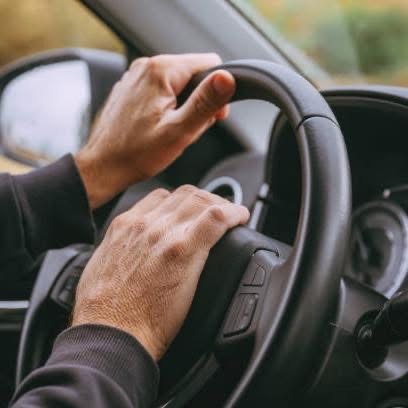
Most Victorian drivers have used their horn in a way that is technically illegal without knowing it. A quick beep at a mate, a frustrated tap at slow traffic, a celebratory honk — all of these fall outside what Regulation 224 of the Road Safety Road Rules 2017 actually permits. And there is one more thing most people don't know: the horn is the first item checked in the VicRoads drive test pre-drive safety check. If it doesn't work, the test cannot proceed.
Under Regulation 224 of the Road Safety Road Rules 2017, a driver must not use a horn, or any other warning device fitted to the vehicle, unless:
The regulation also separately prohibits the use of a horn or warning device that makes an unreasonably loud or harsh noise — covering aftermarket modifications to the horn itself.
The test under Regulation 224 is whether the use was necessary to warn of the vehicle's presence or a potential danger. Not helpful. Not courteous. Not satisfying. Necessary.
A pedestrian who is about to step into your path and hasn't seen you — horn use is necessary. A driver who is slow at a green light — horn use is not necessary, because no danger is present. The line is genuine hazard warning versus any other use. Every other use, no matter how casual or well-intentioned, is technically an offence.
Misusing a vehicle horn in Victoria is a road rules offence. The specific penalty amount is subject to change as infringement notice schedules are updated periodically — always check the current fine amount at vicroads.vic.gov.au or vic.gov.au for the most accurate figures.
"The horn is the very first item in the VicRoads pre-drive safety check. Before anything else — before the seat adjustment, before the mirrors, before the engine starts — the examiner directs the applicant to sound the horn. The purpose is to confirm the horn is operational. If it doesn't work, the vehicle fails the safety check and the drive test cannot proceed."
The pre-drive safety check sequence — items confirmed before the test begins:
If any item in the pre-drive check fails: The test cannot proceed. If the horn does not sound, or the brake lights do not operate, or the wipers don't work — the examiner records a pre-drive failure and the test is cancelled for that day. This cannot be appealed. The vehicle must be repaired and a new appointment booked. Check all these items before your test day — not on it.
"In 1,800+ drive tests, I can count on one hand the number of times a student legitimately needed to sound the horn during the assessment. When it happened — a dog running onto the road, a pedestrian stepping off a kerb without looking — it was exactly the right response and I noted it. What I also occasionally saw was a student who tapped the horn out of anxiety or habit when a car didn't move immediately at a light. That is an Other Illegal Action — a Critical Error. The horn during a drive test, if used, must be used correctly. A single horn misuse in Stage 1 contributes to your critical error count."
The VicRoads drive test criteria assess whether the driver's actions comply with Victorian road rules throughout both stages. Horn use falls under the Other Illegal Action category — a Critical Error if used for a non-permitted purpose.
Correct horn use during test: A genuine hazard warning — pedestrian, animal, or vehicle presenting immediate danger. This is assessed as a positive response to a hazard, consistent with the Observation criteria.
Incorrect horn use during test: Beeping at a slow driver, tapping at a green light, any non-hazard use. Recorded as Other Illegal Action — a Critical Error. More than one Critical Error in Stage 1, or more than two across the full test, terminates the result.
Beyond the legal issue, habitual horn misuse creates a practical road safety problem. Studies on driver behaviour consistently show that horn use from behind — even a brief tap — is one of the triggers most likely to escalate a situation into aggressive road behaviour from the other driver. A driver who is slow at a light and receives a horn tap from behind often responds with deliberate slowness, aggressive braking, or confrontation.
A few seconds of patience costs nothing. An escalated confrontation on the road can cost significantly more — in time, stress, and potential damage or injury. The road rules prohibition on horn misuse exists partly because the horn, used inappropriately, is more likely to create a dangerous situation than prevent one.
For new drivers building habits: the instinct to beep at something that is slow or frustrating is understandable but counterproductive. A calm, predictable driving style that does not react aggressively to other drivers' behaviour is consistently safer — and it is the driving style the VicRoads criteria reward.
Every Lessons2Drive lesson covers not just how to drive, but the exact road rules and criteria the VicRoads examiner applies. Founded by an ex-VicRoads Licence Testing Officer. All instructors hold Working With Children Check. 304 five-star Google reviews. Serving Melbourne's west and north.
