
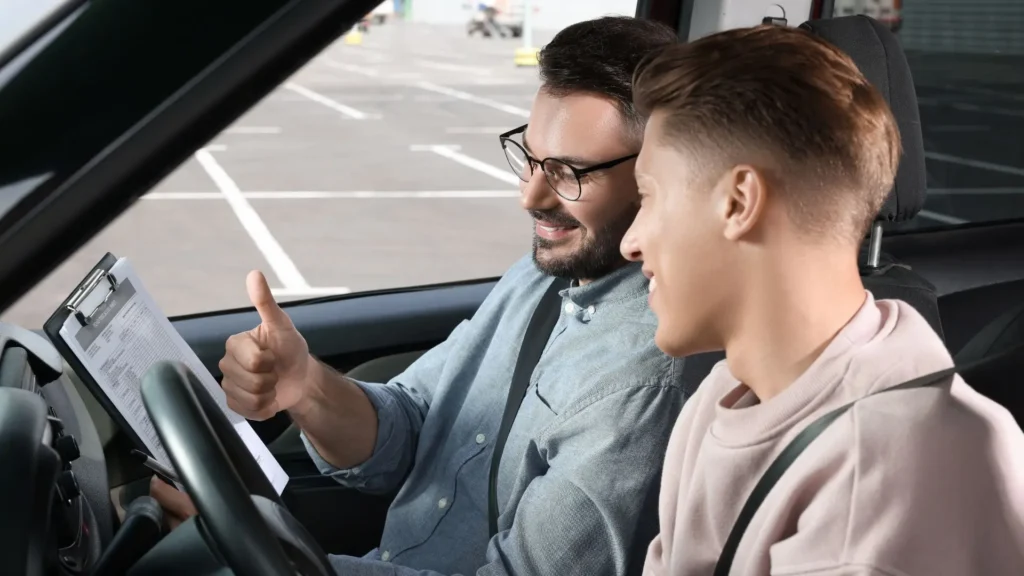
Sitting your VicRoads drive test is one of the most important milestones of your life. But thousands of learners across Australia fail every year — not because they can't drive, but because of mistakes that were entirely avoidable.
I know this because I spent years on the other side of the car. As a VicRoads Licence Testing Officer, I conducted over 1,800 official drive tests. I watched the same mistakes appear again and again — in nervous students and confident ones alike. Most of them had no idea they were doing anything wrong, because nobody had ever told them.
When I founded Lessons2Drive, I built our entire teaching system around the mistakes I personally saw end tests. Here are the twelve most common — and exactly what to do about each one.
Some students on this list did everything right — and still received a fail. In those cases, our instructors identified the error and had the result overturned on the spot. Knowing the criteria is not just about preparing students. It is about protecting them when something goes wrong during the test itself.
VicRoads places observation at the centre of the entire assessment. Testers are trained to watch your eyes — not just your car. A student who is technically driving well but not scanning continuously will still fail, because the assessment is about decision-making, not just vehicle control.
The most common observation failures: fixed gaze on the road directly ahead, not scanning side streets and driveways when approaching, mirrors checked on a timer rather than meaningfully, and missing a pedestrian stepping off a kerb at the edge of vision.
Practice scanning deliberately: ahead, left, right, mirrors, back to ahead — continuously and in that rhythm. Your eyes should never be still. In lessons we teach this as a physical habit, not a concept, so it becomes automatic before test day.
Missing a required mirror check or failing to perform a head check before a lane change, merge, or pull-out is one of the fastest ways to fail a drive test. These are not optional steps — they are formally assessed at every relevant point in the test.
The distinction testers watch for: a mirror check where your eyes visibly move to the mirror versus a student who appears to glance in the general direction. And a shoulder check requires your head to actually rotate — a small flick of the eyes is not sufficient and is not recorded as a check.
Check mirrors every 5–10 seconds during normal driving. Before every lane change, merge, or pull-out: mirror, signal, head check — in that order, every time. Make the head rotation deliberate and visible. Build this as a sequence, not a checklist you have to think about.
Misjudging a safe gap — taking a gap that requires another driver to brake or slow — is one of the most serious errors in the VicRoads assessment. If another road user takes evasive action because of your decision, the test ends immediately. This is classified as an Immediate Termination Error.
The opposite error also costs marks: waiting through multiple safe gaps without proceeding. Excessive hesitation at intersections, roundabouts, and merges signals poor hazard perception and lack of confidence — both of which are assessed.
The rule is simple but requires practised judgement: take the first safe gap available. A safe gap is one where no road user needs to adjust their speed or path because of your decision. Practice gap selection in real traffic — not just in quiet streets — before your test.
Signalling errors come in two forms: omitting a signal entirely (which can be a Critical Error) and incorrect signal timing, which costs marks even when the signal is given. The VicRoads Drive Test criteria specify minimum signal durations that most learners — and many instructors — are not aware of.
Required minimum durations: at least 3 seconds before turning, changing lanes, or diverging. At least 5 seconds before moving from a parked or stationary position — even when no other traffic is visible. These are not guidelines. They are assessment criteria.
Signal early — earlier than feels natural. Count to three before beginning any turn or lane change. When pulling from a stationary position, count to five. Roundabout signalling requires specific attention: left signal when taking the first exit (if less than halfway around), no signal for the halfway exit, right signal for exits more than halfway around.
Treating a Stop sign as a Give Way sign is one of the clearest ways to fail a drive test — and one of the most common. An Incomplete Stop (where the vehicle slows but wheels do not fully stop) is a Critical Error. Driving through a Stop sign without a clear intention to stop is an Immediate Termination Error — the test ends on the spot, regardless of whether any other traffic is present.
The detail most students miss: the stop must be made behind, but within 2 metres of, the stop line. Stopping with the front of the car over the stop line is also an error, even if wheels did stop. Position and full cessation of movement both matter.
At every Stop sign: come to a complete, wheels-fully-stopped halt behind the line. Count one second at a standstill before proceeding. Check in both directions from the stopped position. Then go when clear. There are no shortcuts at a Stop sign during a drive test.
Give way errors at intersections, pedestrian crossings, and roundabouts account for a significant proportion of drive test failures. The most serious: failing to give way when another road user takes evasive action — this is an Immediate Termination Error. But give way errors that don't cause evasive action still result in Critical Error markings that can end the test.
Pedestrian crossings carry specific rules that catch many students. You must not proceed while a pedestrian is on the crossing — even if they are walking away from you. And you must not stop unnecessarily before a crossing when no pedestrian is present — that is also an error in the opposite direction.
During Vineeth's drive test, the tester marked three Critical Errors during Stage 2 — which would have ended the test as a fail. Our instructor reviewed each situation immediately and identified that none of the three markings met the actual threshold for a Critical Error under the assessment criteria. He raised the concern directly, referencing the specific criteria. The tester had no grounds to maintain the assessment.
Know the give way rules at every intersection type — T-intersections, cross-intersections, and roundabouts — and practise them in real traffic. When in doubt at a crossing, stop and wait until the crossing is completely clear before proceeding. The test penalises both failure to give way and unnecessary stopping — knowing the precise threshold for each is what separates prepared students from unprepared ones.
Speeding by 5 km/h or more at any point during the test is an Immediate Termination Error — the test ends immediately. In a school zone during operating hours, any excess above the posted limit ends the test. These are non-negotiable.
But the opposite error is also penalised. Driving 10 km/h or more below the posted limit for a substantial portion of a test stage is a Critical Error. Students who are nervous often creep below the limit without realising it — and this signals lack of confidence and hazard awareness to the tester.
During Stage 2 of Anu's drive test, the tester raised a concern about her speed choice, indicating it as a fail. Chamitha identified that under the specific road conditions and Drive Test criteria applicable to that situation, Anu's speed choice was within the permitted range. The criteria allows for a lower speed choice under those conditions. The applicable rule was pointed out to the tester, who accepted the explanation and continued the test.
Know the posted speed limit on every road section of your test — and hold it. Check your speedometer regularly. In school zones, drop to the zone speed immediately upon entering, regardless of whether children are visible. On open roads, drive at the posted limit unless conditions require otherwise — and understand what "conditions" means under the criteria.
Some learners stop when turning — despite no pedestrians, no oncoming traffic, and no give way obligation. Others wait at green lights for several seconds before proceeding, or slow to a crawl at intersections when the path is completely clear. This signals lack of confidence and poor hazard perception to the tester — both of which are formally assessed.
Unnecessary hesitation also frustrates the flow of traffic around you, which is itself an assessment consideration. The test expects you to drive confidently and decisively when conditions allow — not just safely when conditions require caution.
Practise identifying when you must give way versus when the path is clear and you should proceed without hesitation. Build the habit of decisive action in lessons — not just careful action. A confident, well-timed turn into a clear road is exactly what the tester wants to see.
Lateral position is a formally assessed item in the VicRoads Drive Test, evaluated both during specific tasks and as a stage-wide observation across the entire test. Errors include: drifting over the centre line, cutting corners on left turns, failing to maintain 1.2 metres clearance from parked vehicles, driving in bicycle-only lanes when not permitted, and straddling lane markings.
The most serious lateral position error — driving on the wrong side of the road approaching an intersection — is an Immediate Termination Error. But even less dramatic drifting, if consistent, accumulates markings that can fail a test quietly without the student realising anything went wrong.
During Dilan's drive test, the tester made an incorrect call at a traffic light situation — marking a fail based on a misapplication of the criteria for that specific scenario. Our instructor identified the exact rule applicable and explained clearly why the situation did not constitute a fail. The tester agreed. The test continued.
Stay centred in your lane at all times. On left turns, hug the left side without crossing into the gutter. On right turns, approach from the left of the right lane and exit into the left lane unless turning onto a multi-lane road. Practice with an instructor who watches lane position — not just whether you avoided hazards.
Reverse parallel parking and reverse angle parking are assessed tasks in the VicRoads drive test. Students who have not practised them recently, or who have built incorrect reference points from driving with parents, often struggle under the pressure of the test environment — with a tester watching silently beside them.
The assessment criteria for parking manoeuvres is specific: the vehicle must end up correctly positioned, within the marked space, without mounting a kerb, and without requiring an excessive number of corrections. Each of these has a defined threshold.
During Ashmitha's reverse parallel park, the tester called a fail, pointing to aspects of the execution as errors. Our instructor immediately recognised that the tester's assessment did not align with the VicRoads Drive Test criteria for that specific manoeuvre. The concern was raised professionally. The tester agreed to continue the test.
Practise reverse parking on the actual type of space you will encounter on your test — not just any quiet street. Learn the reference points specific to the car you will sit the test in. Accuracy matters more than speed. If you feel uncertain mid-manoeuvre, correct rather than commit — you are allowed to take corrections.
Anxiety during a drive test does not make students forget how to drive. What it does is interrupt the automatic skills they have built — replacing them with overthinking. A student who mirror-signal-head checks automatically in lessons starts consciously counting through the sequence in the test, which slows the timing and makes each check visible as a deliberate act rather than a natural one.
The cascade is well-documented: one missed observation leads to a slightly tense shoulder check, which leads to a jerky lane change, which leads to the student focusing on what went wrong rather than what is coming next. One error compounds into several.
The solution is not relaxation techniques — it is familiarity. Students who have experienced mock test conditions repeatedly, with an instructor using the exact language and format of a real assessment, arrive at the test having already lived through it multiple times. The environment is familiar. The pressure is familiar. At Lessons2Drive, we build this deliberately from early lessons — not as a final session before the test date.
Hazard perception is assessed continuously throughout the drive test — not as a separate task. The tester watches whether you identify developing hazards early enough to respond smoothly, or whether you react late and abruptly. Late reactions to cyclists, pedestrians stepping off kerbs, reversing vehicles, and merging traffic all cost marks.
The distinction between a smooth early response and a late hard brake is the difference between a well-trained driver and someone who has practiced routes without building genuine awareness. Students who have driven the same roads 50 times know the hazards — but often fail to scan for unexpected ones.
Hazard perception is built in unfamiliar environments, not familiar ones. Practice in new areas, in different traffic conditions, and at different times of day. Narrate hazards out loud during lessons — "pedestrian left kerb," "cyclist approaching intersection ahead" — to build the scanning instinct before it needs to be automatic under test pressure.
After 1,800 official drive tests, I can tell you: most students who fail could drive. The problem was never their ability behind the wheel. It was that nobody ever taught them what the tester was actually marking — or stood up for them when something went wrong during the test itself.
The 12 Mistakes — At a Glance
What to Do If You Have Already Failed
If you have already failed your VicRoads drive test, the result sheet tells you the category — but not always the full picture. In some cases, the assessment itself was incorrect. In others, the error was real but fixable with the right instruction.
Either way, the next step is the same: understand exactly what happened, fix what needs fixing, and prepare properly for the next attempt. We offer assessment lessons specifically designed for students who have already failed — where we identify the real cause and build a plan around it.
Failed your VicRoads drive test? → See how we help students who have already failed get a different outcome next time.
Nervous or anxious driver? → We specialise in building calm, genuine confidence before test day.
Learn From the People Who Used to Test You
Lessons2Drive is the only driving school founded by an ex-VicRoads Licence Testing Officer. Every instructor knows the Drive Test criteria from the inside — because they were trained by someone who applied it in 1,800 official tests.