Written by
Chamitha Lokuwithana — Ex-VicRoads Licence Testing Officer
1,800+ official drive tests conducted · Founder, Lessons2Drive
Is it illegal to leave your car unlocked in Victoria? Yes — and many drivers don't realise it until they receive an on-the-spot fine. Under Regulation 213 of the Road Safety Road Rules 2017, there are specific legal requirements you must follow every time you leave your vehicle unattended. At Lessons2Drive, we teach these rules to every student — because safe, legal driving doesn't stop when you park the car.
The Short Answer
If you leave your vehicle unattended — more than 3 metres away from it with no one aged 16 or over remaining inside — and you have not secured it properly, you are committing an offence under Regulation 213. The fine is set by the current penalty unit rate. Always check the current amount at vicroads.vic.gov.au as it changes when penalty units are updated.
The Five Legal Requirements — Regulation 213 in Full
When you stop and leave your vehicle unattended — more than 3 metres away, with no person aged 16 or older remaining inside — Regulation 213 requires all five of the following steps to be completed. All five. Not some. All.
The parking brake — commonly called the handbrake — must be applied before you leave the vehicle. This prevents the vehicle from rolling if left on a slope or if a mechanical fault develops while unattended. The requirement applies regardless of whether you think the car is on level ground.
Drive test connection: The handbrake is item 6 in the VicRoads pre-drive safety check. The examiner asks the applicant to identify the parking brake before the test begins. Knowing where it is and how to apply it correctly is assessed from the very first moment of the test — not just when parking.
The engine must be switched off. Leaving a vehicle running while unattended — even briefly — is an offence under this regulation. It also creates a theft risk, as an unlocked running vehicle is the easiest vehicle to steal. For vehicles with push-button start, the engine must be shut down, not merely put in accessory mode.
Common situation: Leaving a car running to keep the air conditioning on for a child or pet remaining inside. If the person remaining is under 16 and the driver is more than 3 metres away, this is still an offence — and leaving a child or animal in a running vehicle creates separate safety and legal risks of its own.
The ignition key must be removed from the vehicle. For push-button start vehicles, the key fob must not be left inside the car — if the fob is present, the vehicle can be started by anyone who enters it. This requirement exists specifically to prevent opportunistic theft by ensuring the vehicle cannot be started without the key that is now with the driver.
Modern vehicle note: For push-button start vehicles, confirm the fob is in your pocket or bag before walking away. The car will warn you if the fob is detected inside when you try to lock it — but not all vehicles do this reliably. Make it a physical habit to confirm the fob is with you.
4
Secure the Windows — Maximum 2cm Open
All windows must be closed or left open no more than 2 centimetres. A 2cm gap is enough for ventilation but too small for a hand to reach through. This applies to all windows — driver, passenger, and rear. Sunroof openings are included. Leaving a window substantially open defeats the security purpose of the rule even if the doors are locked.
Hot weather consideration: Leaving windows open more than 2cm to prevent the interior from overheating is understandable but still an offence. If heat is a genuine concern — particularly if a pet will be left inside, which raises separate animal welfare issues — consider parking in shade or using a sunshade rather than leaving windows open beyond the 2cm limit.
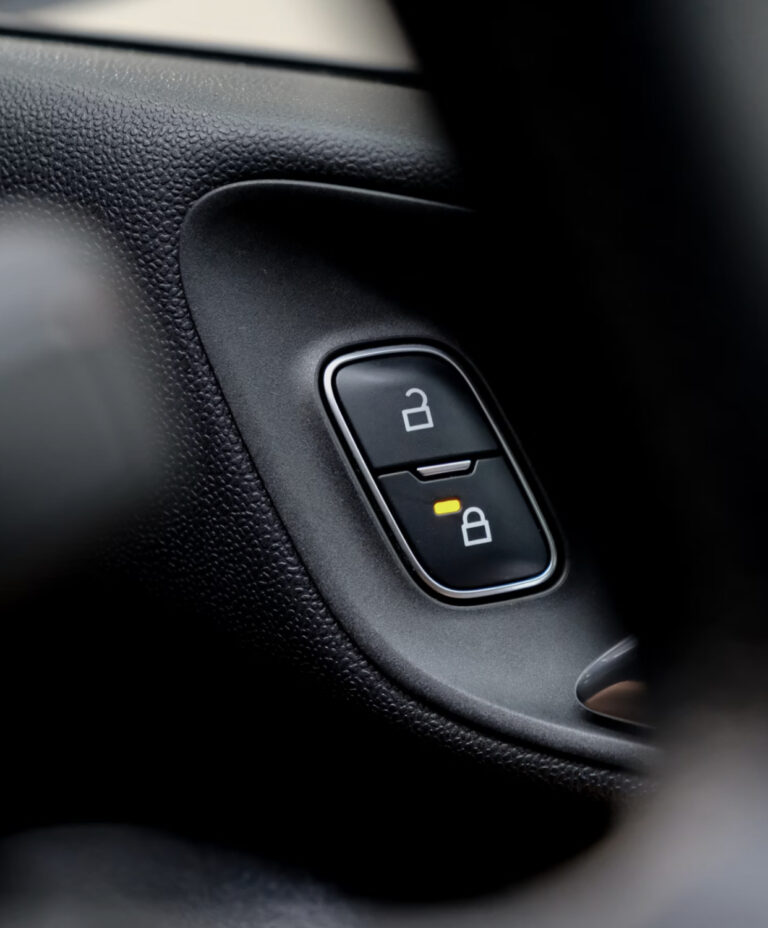
All doors must be locked. For most modern vehicles, pressing the remote lock once locks all doors and activates the alarm. Confirm the lock has engaged — either by the audible beep, the indicator flash, or by physically checking the door handle. Do not assume the doors have auto-locked without confirming.
Insurance implication: Many comprehensive car insurance policies contain a condition that the vehicle must have been secured at the time of theft. If a vehicle is stolen while unlocked, some insurers may deny or reduce the claim on the basis that the owner failed to take reasonable precautions. Check your policy's security conditions specifically.
The 3 Metre Trigger — When the Rule Applies
The security requirements of Regulation 213 are triggered when both conditions are met simultaneously:
Condition 1
The driver is more than 3 metres from the nearest point of the vehicle
Condition 2
No person aged 16 or over remains in or immediately beside the vehicle
If a person aged 16 or over remains with the vehicle — in the passenger seat, standing beside it — the driver is exempt from the security requirement for as long as that person remains present. The moment they leave (or are under 16), the rule applies.
Practical example: You pull up to collect someone from a shop. You stay in the car with the engine running — no offence. You get out and stand 2 metres from the car waiting — no offence, you're within 3 metres. You walk 4 metres toward the shop entrance — all five requirements now apply, even for a 30-second wait.
⚡ The Drive Test Connection — Pre-Drive Safety Check
"The parking brake — what most people call the handbrake — is specifically checked in the VicRoads pre-drive safety check. Before the test begins, I'd ask the applicant to identify the parking brake. This isn't just a formality. Throughout the test, the handbrake is used correctly whenever the vehicle is stopped at a kerb for the reverse park, and must be identified before engine start as part of the vehicle safety confirmation. A student who doesn't know where their handbrake is at the start of the test has already signalled that their pre-drive preparation is incomplete."
"The broader habit this law reinforces — handbrake on, engine off, windows up, doors locked — is the same departure sequence that prevents vehicle roll-aways, prevents theft, and protects anything left inside. For a learner driver building habits, adding this sequence to the end of every drive is as important as the seatbelt-before-engine sequence at the start."
— Chamitha Lokuwithana, Ex-VicRoads Licence Testing Officer · Founder, Lessons2Drive
Build the Exit Sequence — Five Steps Every Time
The goal is for this sequence to be automatic — the same way the seatbelt-before-engine sequence should be automatic when you get in. Do this every time you leave the vehicle, and the law compliance takes care of itself.
Remove key (or confirm fob is with you)
Close windows to within 2cm or fully shut
Lock doors — confirm engagement
Reg 213 — Quick Reference
Trigger: Driver more than 3 metres away AND no person 16+ remaining with vehicle.
5 requirements: Parking brake on · Engine off · Key removed · Windows ≤2cm · Doors locked.
Penalty: Infringement fine (penalty unit-based). Check current amount at vicroads.vic.gov.au.
Insurance: Theft from unsecured vehicle may affect claim validity. Check your policy.
Drive test: Handbrake identified in pre-drive check. Used correctly throughout test.
Regulation: Road Safety Road Rules 2017, Regulation 213.
Build habits that keep you legal for life
Learn with Lessons2Drive
At Lessons2Drive, we don't just teach you to pass the drive test — we teach the road rules and habits that keep you safe and legal on Victorian roads for life. Founded by an ex-VicRoads Licence Testing Officer. All instructors hold Working With Children Check. 304 five-star Google reviews.
📞 0400 008 706
✉ Info@Lessons2Drive.com.au
🌐 lessons2drive.com.au